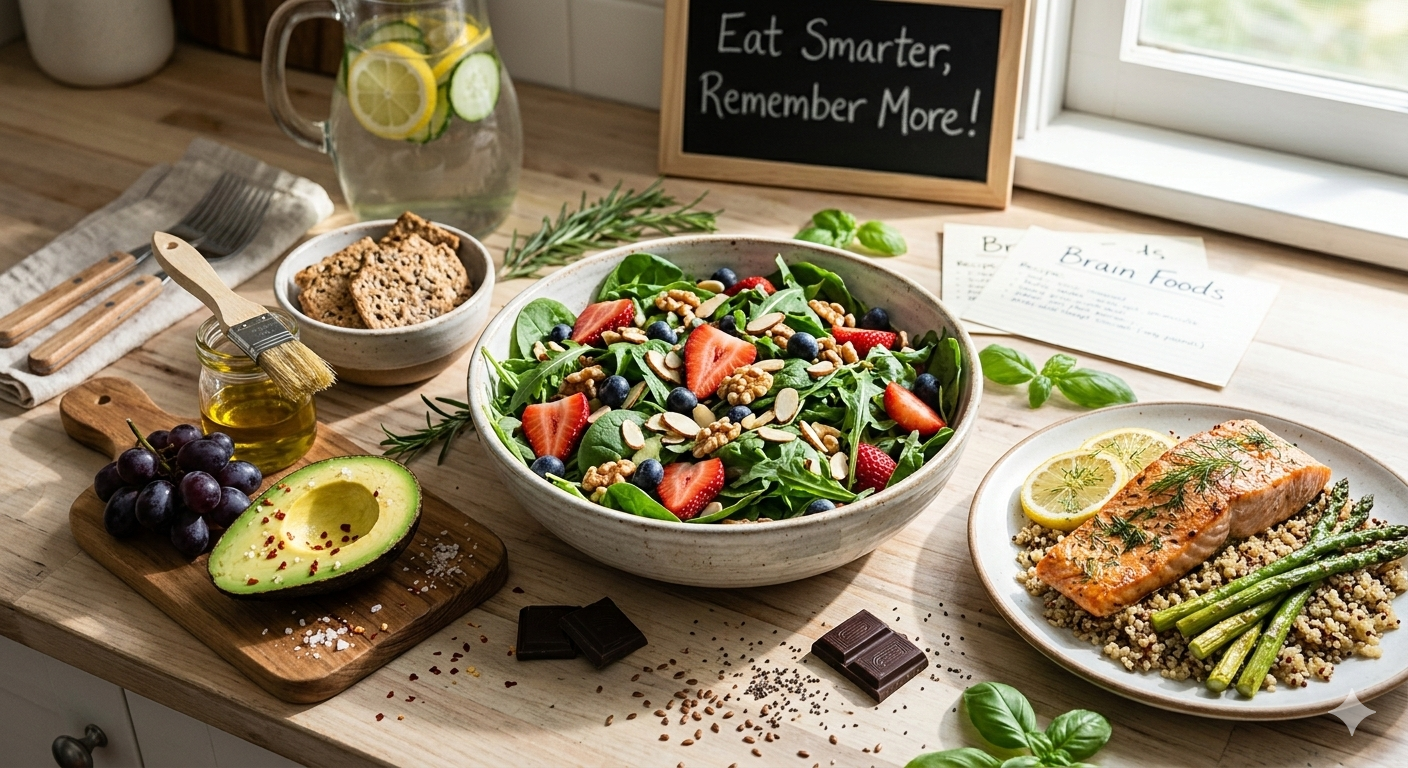
When we think about memory, we often think about puzzles, reading, or staying mentally active. But one of the most powerful tools for protecting and strengthening memory isn’t found in an app or a brain-training game — it’s in your kitchen.
The brain may only make up about 2% of your body weight, but it uses roughly 20% of your daily energy. That means what you eat directly impacts how well your brain cells function, communicate, and repair themselves. Research continues to show that certain foods can support memory, focus, and long-term brain health.
If you want to nourish your brain for today and protect it for the future, here’s what to put on your plate.
1. Fatty Fish: Fuel for Brain Cells
Fatty fish are often considered the gold standard of brain food — and for good reason.
Fish like salmon, sardines, mackerel, and trout are rich in omega-3 fatty acids, particularly DHA (docosahexaenoic acid). DHA is a major structural component of brain cells. Adequate omega-3 intake is linked to better memory performance and may reduce age-related cognitive decline.
Research from institutions like Harvard Medical School has highlighted the role of omega-3s in maintaining healthy brain cell membranes and supporting communication between neurons.
How to add it:
- Aim for 2 servings of fatty fish per week.
- Try grilled salmon, sardines on whole-grain toast, or a tuna salad with olive oil.
- If you don’t eat fish, talk to a healthcare provider about omega-3 supplements.
2. Leafy Greens: Natural Brain Protectors
Dark leafy greens such as spinach, kale, collard greens, and Swiss chard are packed with nutrients associated with slower cognitive decline.
They contain:
- Vitamin K (important for brain cell health)
- Folate (supports neurotransmitter function)
- Beta-carotene and antioxidants (fight oxidative stress)
Oxidative stress contributes to aging in the brain. Antioxidant-rich foods help neutralize free radicals that can damage cells over time.
How to add it:
- Toss spinach into smoothies.
- Make a daily salad with mixed greens.
- Add chopped kale to soups and stews.
A simple habit like eating one serving of leafy greens daily may have long-term benefits for memory preservation.
3. Berries: Powerful Antioxidant Support
Berries — especially blueberries and strawberries — are loaded with flavonoids, compounds known to support brain function.
Studies suggest that regular berry consumption may:
- Improve memory
- Enhance communication between brain cells
- Reduce inflammation in the brain
Some research conducted at Tufts University found that blueberries may help delay short-term memory loss associated with aging.
How to add it:
- Sprinkle blueberries over oatmeal.
- Blend berries into yogurt.
- Freeze them for a refreshing snack.
Fresh or frozen both work — just aim for minimal added sugar.
4. Nuts and Seeds: Small but Mighty
Nuts and seeds provide healthy fats, vitamin E, and antioxidants. Vitamin E is particularly important for protecting brain cells from oxidative damage.
Walnuts are especially notable for brain health due to their plant-based omega-3 content. Almonds, sunflower seeds, and pumpkin seeds are also excellent choices.
Research suggests that higher vitamin E intake is associated with less cognitive decline in older adults.
How to add it:
- A small handful (about 1 ounce) daily.
- Add chia or flaxseeds to smoothies.
- Top salads with walnuts or sunflower seeds.
Portion control matters — they’re calorie-dense but highly nutritious.
5. Whole Grains: Steady Energy for Focus
Your brain runs on glucose — but it prefers a steady supply rather than sharp spikes and crashes.
Whole grains such as oats, quinoa, brown rice, and whole wheat bread provide slow-releasing carbohydrates that help maintain stable blood sugar levels. Stable blood sugar supports concentration and mental clarity.
Diets that promote cardiovascular health — including whole grains — also support brain health. That’s because what’s good for the heart is often good for the brain.
How to add it:
- Choose whole-grain bread instead of white.
- Swap white rice for brown rice or quinoa.
- Start the day with steel-cut oats.
6. Olive Oil: Healthy Fat for Brain Longevity
Extra-virgin olive oil is a cornerstone of the Mediterranean diet, a dietary pattern strongly associated with reduced cognitive decline.
The Mediterranean diet has been extensively studied by researchers at Mayo Clinic and other major institutions for its benefits in heart and brain health.
Olive oil contains antioxidants and anti-inflammatory compounds that help protect brain tissue. Chronic inflammation is increasingly linked to cognitive decline and memory problems.
How to add it:
- Use olive oil as your main cooking oil.
- Drizzle over vegetables.
- Replace butter with olive oil in many recipes.
7. Eggs: Brain-Building Nutrients
Eggs are rich in choline, a nutrient that plays a key role in producing acetylcholine — a neurotransmitter involved in memory and learning.
They also provide:
- B vitamins (including B6 and B12)
- Folate
- Protein for overall brain function
B vitamins are important for reducing homocysteine levels, which have been linked to cognitive impairment when elevated.
How to add it:
- Enjoy eggs for breakfast.
- Add hard-boiled eggs to salads.
- Make a veggie omelet with spinach and tomatoes.
8. Dark Chocolate: A Brain-Boosting Treat
Yes — chocolate can be good for your brain.
Dark chocolate (70% cocoa or higher) contains flavonoids, caffeine, and antioxidants that may support memory, focus, and mood. Flavonoids may improve blood flow to the brain, which supports cognitive function.
Moderation is key. A small square per day can be part of a memory-supportive diet.
9. Green Tea: Calm Alertness
Green tea contains caffeine and L-theanine, a combination that supports calm focus. It also contains antioxidants that protect brain cells from oxidative stress.
Some studies suggest that regular green tea consumption may be associated with improved working memory and attention.
Try replacing sugary beverages with unsweetened green tea for a simple cognitive upgrade.
The Bigger Picture: Patterns Matter More Than Perfection
No single food will “fix” memory problems overnight. Brain health is built through consistent habits over time.
The most evidence-backed dietary pattern for memory support is the Mediterranean-style diet — rich in:
- Vegetables and fruits
- Whole grains
- Healthy fats
- Lean proteins
- Limited processed foods and added sugars
Emerging research on the MIND diet (a blend of Mediterranean and DASH diets) also highlights specific brain-protective foods like leafy greens, berries, nuts, and olive oil.
But diet is just one piece of the puzzle.
For optimal memory support, combine healthy eating with:
- Regular physical activity
- Quality sleep
- Social engagement
- Lifelong learning
- Stress management
Simple Daily Brain-Healthy Plate
If you’re unsure where to start, try building your plate like this:
- Half: Vegetables (especially leafy greens)
- One quarter: Lean protein (fish, beans, eggs)
- One quarter: Whole grains
- Add: A drizzle of olive oil or handful of nuts
- Dessert: Berries or a square of dark chocolate
Small, sustainable changes make the biggest long-term difference.
Final Thoughts
Your memory is one of your most valuable assets. While aging is natural, the way we nourish our bodies can significantly influence how well our brains function over time.
Choosing foods that reduce inflammation, support circulation, and protect brain cells is one of the most proactive steps you can take for lifelong cognitive health.
Healthy memory isn’t just about remembering names or where you put your keys. It’s about preserving independence, clarity, and quality of life.
And it starts — quite simply — with what’s on your fork.