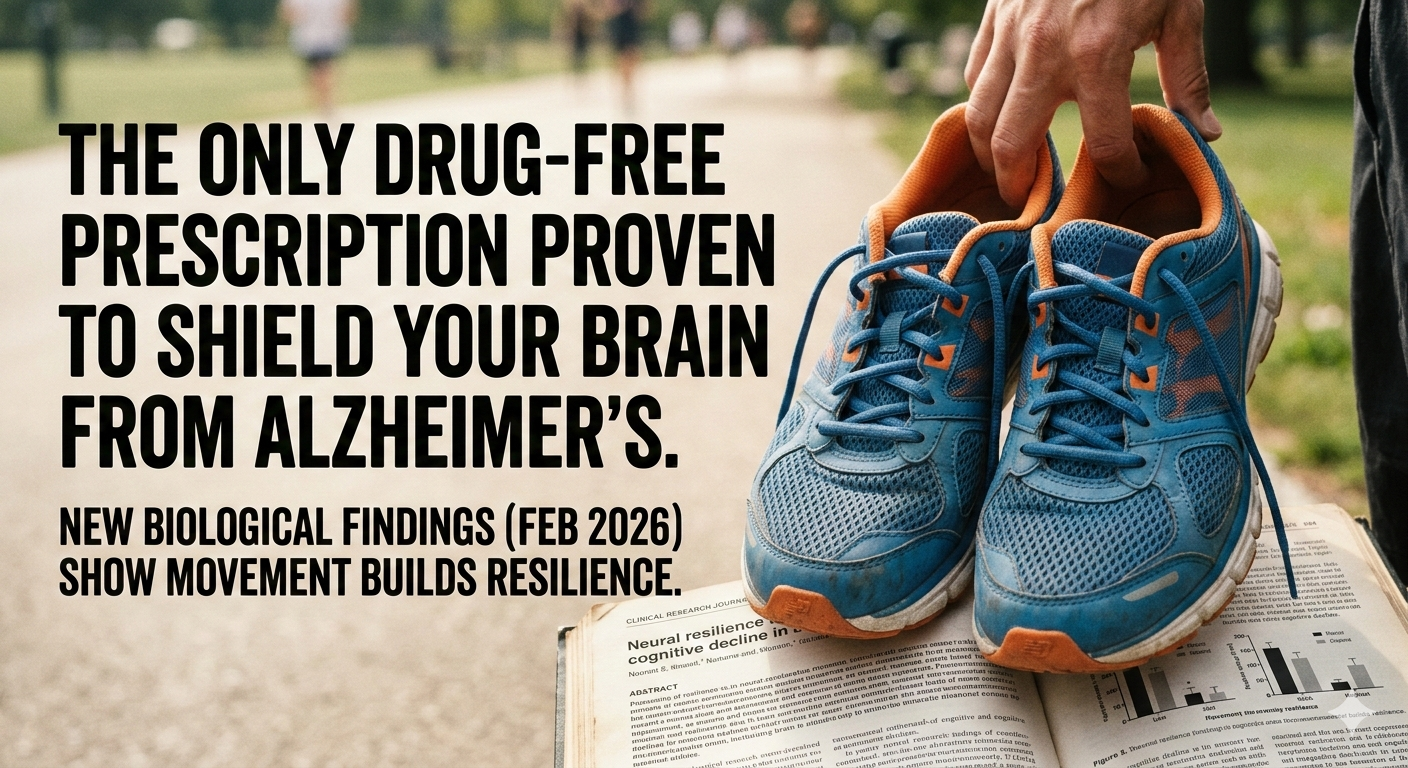
We often exercise for our hearts or our waistlines, but the most important muscle you’re working might be your brain. Recent research—including breakthrough studies from February 2026—reveals that exercise isn’t just a “healthy habit”; it’s a biological shield against cognitive decline.
🛡️ How It Works: The “Body-to-Brain” Shield
Science has identified several ways physical activity protects our neural pathways:
- Sealing the “Leaky” Brain: New research from UCSF (2026) found that exercise prompts the liver to release an enzyme (GPLD1) that strengthens the blood-brain barrier. This prevents harmful toxins from entering the brain and causing the inflammation linked to Alzheimer’s.
- The BDNF Boost: Aerobic exercise increases the production of Brain-Derived Neurotrophic Factor (BDNF), a protein that acts like “Miracle-Gro” for the brain, helping to grow new neurons and repair existing ones.
- Amyloid & Tau Reduction: Studies show that regular movement can help clear out beta-amyloid (the sticky plaques) and reduce the buildup of tau proteins—the two primary hallmarks of Alzheimer’s disease.
📉 The Impact in Numbers
- 45% Lower Risk: High levels of physical activity in mid-life are associated with up to a 45% reduction in dementia risk.
- Delaying the Clock: For those already showing early markers of Alzheimer’s, walking just 3,000–5,000 steps a day has been shown to delay cognitive decline by an average of 3 years. Up that to 7,500 steps, and the delay can jump to 7 years.
- Never Too Late: Even starting in late life (ages 65+) can reduce risk by over 40%.
👟 The “Brain-Healthy” Routine
You don’t need to run marathons to see results. The Alzheimer’s Association and recent clinical trials suggest a “balanced recipe” for brain health:
| Exercise Type | Recommended Frequency | Examples |
| Aerobic | 150 mins / week | Brisk walking, swimming, cycling |
| Strength | 2 days / week | Resistance bands, weights, yoga |
| Balance | 2-3 days / week | Tai Chi, standing on one foot |
Pro Tip: “Every step counts.” If 150 minutes feels like a lot, start with 20 minutes of walking a day. The biggest jump in brain protection happens when moving from inactive to moderately active.
The Bottom Line: We may not have a cure for Alzheimer’s yet, but we have a powerful tool for prevention. By keeping your body moving, you are literally giving your brain a fighting chance to stay sharper, longer.